

 See My Latest Article on HelloNation
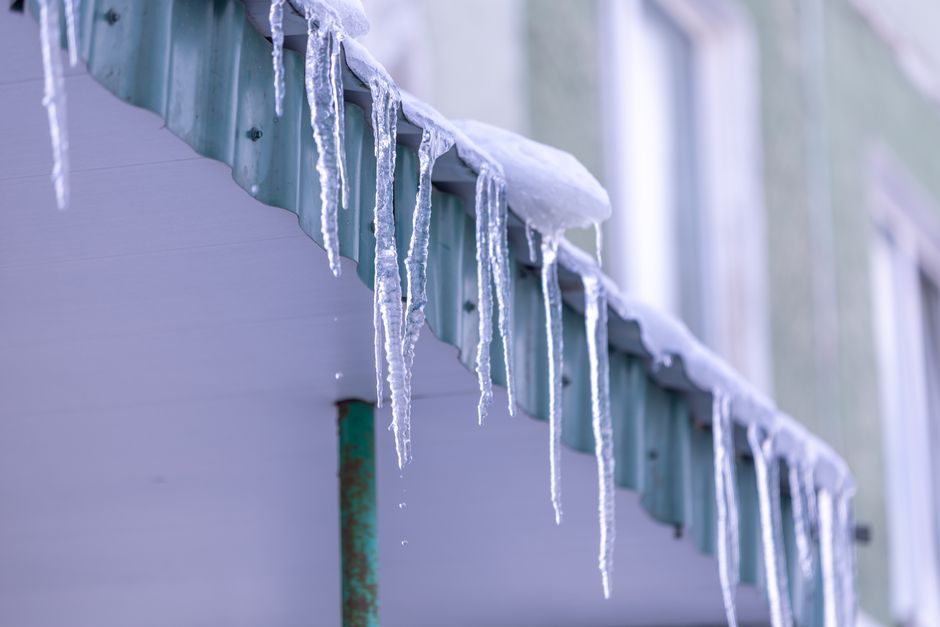
Ice dams are ridges of ice that form along a roof’s lower edge after snow melts on a warmer section of the roof and refreezes near the colder eaves. They are uncommon in Baton Rouge, LA because the area typically has mild winters and limited snowfall, but unusual snow or freezing-rain events can create similar roof-edge problems.
What causes an ice dam?
An ice dam forms when different parts of a roof have significantly different temperatures.
The process usually follows this pattern:
- Heat escapes from the living space into the attic.
- The warmer roof deck melts snow resting above it.
- Meltwater flows toward the roof edge.
- The eaves and gutters are colder because they extend beyond the heated portion of the building.
- The water refreezes at the edge and creates a raised band of ice.
- Additional meltwater collects behind the ice and may move beneath roofing materials.
The ice itself is not always the greatest concern. The more serious problem is trapped water. Roofing materials are designed to shed water downhill, not to hold standing water behind a frozen barrier. If water backs up beneath shingles, flashing, or other roof coverings, it can reach the attic, insulation, ceiling, wall cavities, and electrical components.
Why are ice dams less common in Baton Rouge?
Ice dams generally require a combination of snow cover, below-freezing outdoor temperatures, and enough heat escaping through the roof to melt snow from below. Those conditions are not typical for Baton Rouge.
Winter temperatures in the area are often above freezing during the day, and substantial, long-lasting snow cover is unusual. Even so, short-duration winter storms can produce frozen precipitation, sleet, or wet snow. A roof with poor attic insulation, air leaks, blocked ventilation, or unusually warm roof areas may be more vulnerable during those events.
In this climate, roof damage after a rare freeze may be mistaken for an ice dam. Other possibilities include:
- Wind-driven rain entering at flashing or roof penetrations
- Freeze-thaw movement around plumbing vents
- Ice forming in gutters or downspouts
- Condensation caused by warm, humid indoor air entering a cold attic
- Heavy debris or storm-related damage that blocks drainage
A ridge of ice along the eaves, icicles, water stains near exterior walls, or wet attic insulation after a freezing event can justify closer inspection.
How does attic heat contribute to ice dams?
Attic heat usually comes from the conditioned space below rather than from the sun alone. Warm air can escape through gaps around recessed lights, attic access panels, plumbing penetrations, ductwork, electrical wiring, and ceiling joints.
Insulation slows heat transfer, but insulation cannot perform properly if air is moving around or through it. Areas near exterior wall plates and roof edges are especially vulnerable because the available space for insulation is often limited. Compressed, missing, or uneven insulation can create warm strips on the roof deck.
Ventilation helps by allowing outdoor air to move through the attic and reduce heat buildup. In a vented attic, intake vents near the soffits should have a clear path to exhaust vents near the ridge or upper roof. Insulation should not block that pathway.
Ventilation alone does not correct major air leakage. A well-ventilated attic can still develop warm roof sections if heated indoor air is escaping through the ceiling plane.
What are the most effective ways to prevent ice dams?
Prevention focuses on keeping the roof deck temperature more uniform and reducing heat and moisture movement into the attic.
Seal air leaks before adding insulation
Air sealing is often more important than simply increasing insulation depth. Common leakage points include:
- Attic stair openings
- Recessed light fixtures rated for attic contact
- Bathroom exhaust fan housings
- Plumbing and wiring penetrations
- Duct chases
- Gaps around chimneys or flues
- Ceiling joints and framing connections
Heat-producing equipment and combustion-related components require proper clearances and approved materials. Sealing work should not cover required ventilation openings or create unsafe conditions around flues and chimneys.
Install insulation evenly
Insulation should cover the attic floor continuously, including the areas above exterior walls. Gaps and thin sections can create localized warm spots that encourage snowmelt.
Adding insulation without first addressing air leaks can hide problems and may allow moisture to become trapped. Wet insulation loses effectiveness and can contribute to staining, mold growth, or deterioration of wood components.
Keep soffit-to-ridge airflow open
In a vented roof assembly, baffles can preserve an air channel between the soffit vents and the underside of the roof deck. Without baffles, insulation may fall into the eaves and block intake airflow.
Roof vents should be planned as a balanced system. Adding an exhaust vent without sufficient intake air may not improve performance and can sometimes draw conditioned air from the attic floor.
Maintain gutters and drainage paths
Clean gutters and downspouts help meltwater leave the roof more quickly. They cannot prevent an ice dam caused by uneven roof temperatures, but blocked drainage can make water accumulation worse.
Before winter weather, remove leaves, roofing granules, nests, and other debris. Check that downspouts discharge away from the structure and that gutter sections are securely attached. In Baton Rouge, gutter maintenance is also useful after heavy rain, falling leaves, and tropical-weather debris.
Can roof heaters or heated cables prevent ice dams?
Heated cables may provide limited, temporary relief along selected roof edges, but they do not correct the underlying heat loss or ventilation problem. They must be installed according to electrical and roofing safety requirements and should not be treated as a substitute for attic improvements.
Improperly installed cables can damage roofing materials, create electrical hazards, or leave sections of the roof unprotected. They may be considered for specific recurring problem areas, but the roof and attic assembly should first be evaluated.
What should residents do during an ice-dam event?
Avoid climbing onto a snow- or ice-covered roof. Roof surfaces become slippery quickly, and falling ice can injure people below. Do not chop at an ice dam with a hammer, shovel, or sharp tool because the impact can damage shingles, membranes, flashing, and gutters.
If water is entering the building, place containers beneath active drips, move furniture and electronics away from the area, and watch for ceiling bulging. A bulging ceiling can indicate accumulated water and may require immediate safety action.
After the weather improves, inspect accessible attic areas for wet insulation, stained wood, damp sheathing, and mold-like growth. Commercial buildings should also be checked around roof drains, parapets, loading areas, rooftop equipment, and interior ceiling systems because drainage complications may be less visible from the ground.
Are icicles always evidence of an ice dam?
No. Icicles can form from small amounts of melting and refreezing without creating a substantial dam. However, large, repeated icicles combined with water stains, frozen gutters, or snow remaining on the upper roof while the lower edge is bare suggest uneven roof temperatures.
In a region where major snow events are rare, any repeated ice-related roof problem deserves attention to attic insulation, air leakage, ventilation, drainage, and roof flashing. Addressing those conditions before the next unusual freeze is more reliable than treating visible ice after it forms.